Bottom contacting gears contribute to guarantee European food security and sovereignty; – Area closures to fishing should be done on case-by-case basis based on the best available scientific advice, not through a parody of political debate driven by NGOs and activists; – Bottom trawling is being banned from Marine Protected Areas to give way to industrial activities more environmentally intensive.

The European Bottom Fishing Alliance, representing over 20 000 fishermen and 7 000 vessels strongly condemns initiatives currently directed at the European Parliament to ban bottom trawling in all maritime protected areas.
A crucial vote that puts European food security and sovereignty at risk
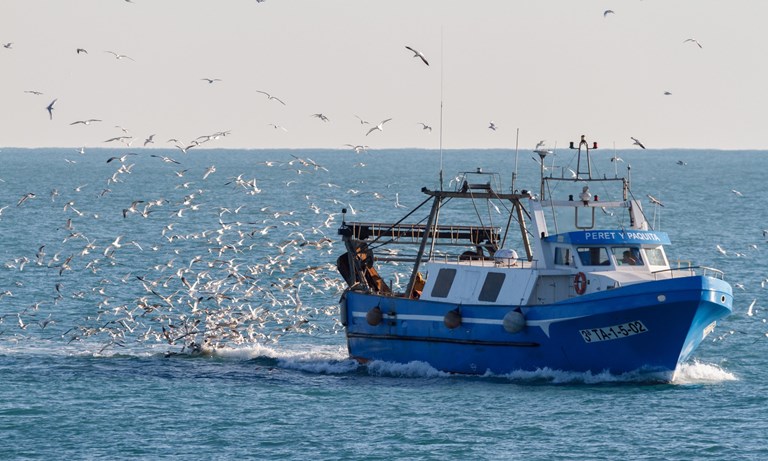
Tomorrow, a crucial vote on the future of bottom fishing will take place in plenary session at the European Parliament. The consequences of this hastily organised vote could prove devastating for European citizens and the continent’s food security and sovereignty. In fact, bottom-trawling vessels play a fundamental role as food suppliers, bringing ashore more than one million tons of healthy and sustainable seafood annually, which represents around 25% of total EU landings in weight and value.
Prohibiting this sustainable food supply would only result in intensifying our imports of fish from foreign countries where we have no control whatsoever on its sustainability. In a particularly tensed international context, where European food security is already threatened by the war in Ukraine, European legislators should look at how to strengthen this sovereignty rather than dramatically weakening it.
Bottom fisheries have made tremendous efforts to become ever more sustainable
For decades the whole fishing industry, in collaboration with EU authorities, has been investing in effective fisheries management. In this context, the industry has helped mapping the seas to identify vulnerable areas, and in some cases, EBFA members have been proactive in closing areas to fishing when needed. This has also helped identifying sustainable areas for bottom fisheries to operate. As a result, fleets mostly operate over sandy, high wave-action seafloor habitats that are able to withstand this kind of fishing effort.
Additionally, EBFA members have heavily invested in technology so as to make their vessels more selective, use less impacting techniques and reduce their fuel consumption. The sustainability of bottom fishing has been scientifically proven, notably in the Atlantic where nearly 100% of the landings from EU-regulated stocks come from populations fished at Maximum Sustainable Yield (MSY) levels. Fully assessed fish stocks in the Atlantic have been increasing significantly, reaching in only 10 years abundance levels 50% higher than in 2010.
Bottom trawling is being banned from MPAs to give way to industrial activities more environmentally intensive
Not all MPAs pursue the goal to protect the seabed: many are established to protect birds or marine species that are not impacted by the use of bottom contacting gears. As such, banning bottom contacting gears in all MPAs simply does not make sense.
Moreover, EBFA members are particularly surprised to note that while NGOs are so eager to protect MPAs against fishing, they don’t seem to have the same commitment to protect them from mass nature artificialisation. It seems that the industrialisation of the sea planned by the exponential expansion of windfarms, including in marine protected areas, does not form part of their political message, as we have seen with the example of the Dogger Bank in the UK.
EBFA calls for a scientifically data driven approach
The EBFA urges members of the European Parliament to organise a science-based debate around this issue at European level, with all stakeholders involved. Ivan Lopez, Chair of EBFA, reacted “It is unacceptable to see that particularly disputed scientific studies – some of which have even been retracted for a lack of scientific rigour – are the basis of the ongoing discussion. The EU cannot legislate based on emotional campaigns from NGOs without even looking first at any Commission’s proposal, the underpinning science and the necessary political debate. Thousands of local fishermen and their families will be the victims of undemocratic debates staged by NGOs. Our fishermen’s continued investments in technology and science, would be frustrated by arbitrary prohibitions. Yes, we can do and will do better, but as long as we are permitted to continue with our traditional activity”.
Mr Lopez concluded: “We are not denying that bottom fisheries have an impact on the environment. It is however worth pointing out that everything we do in life as human beings affects the environment and producing food is no different. Everything we eat costs the planet something. In the fishing sector we do that for a very good reason: to produce healthy, sustainable, and nutritious seafood, with a low impact, no pesticides and no freshwater consumption. We are thus very surprised by this move from European Parliament and strongly call on MEPs to assess the situation very carefully. This vote cannot be taken lightly and must be substantiated by scientific data, which clearly has not been the case yet.”
About EBFA: The European Bottom Fishing Alliance is a fishing industry coalition representing over 20 000 fishermen and 7 000 vessels, ranging from artisanal to large scale bottom fisheries in all waters of the EU, coastal and further out and in third country waters, that have come together to defend, support and showcase the environmental, economic, social and cultural realities of active bottom fishing gears operating across the European Union fishing nations.
Press Contact:
Emmanuel Dubarry – Backbone Consulting – FR/EN: +33 7 82 24 10 97