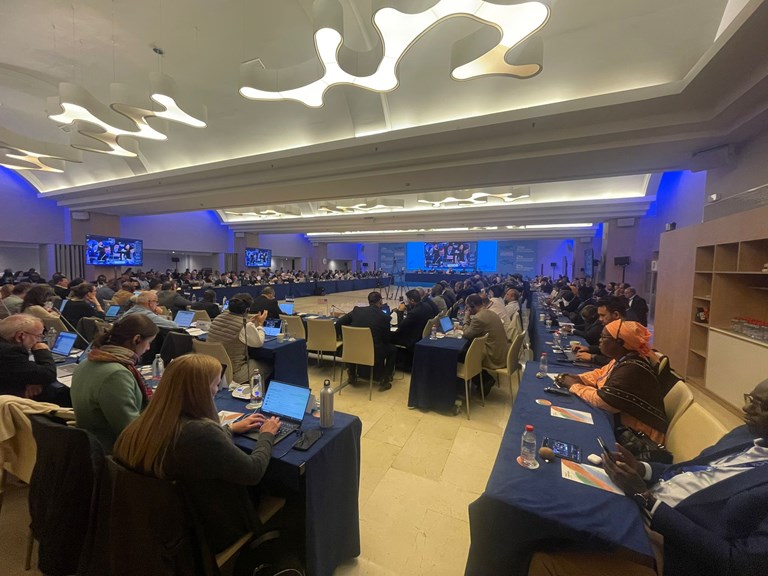
Since December 2017, the international community is elaborating an international legally binding instrument on the conservation and sustainable use of marine Biological diversity of areas Beyond National Jurisdiction (BBNJ), under the auspices of United Nations (UN). These areas comprise 95% of our oceans. The treaty aims to implement area-based management tools, including marine protected areas (MPAs), and to regulate human activities in the High Seas. The United Nations will convene a resumed fifth session of the BBNJ from 20 February to 3 March 2023, in New York City, to try to reach a final agreement.

The fishing sector represented by Europêche recalls that the mandate given by the UN to BBNJ negotiators is clear: this process and its result should “not undermine” existing relevant legal instruments and frameworks and relevant global, regional and sectoral bodies. Therefore, the BBNJ process is banned from amending the existing regime on fisheries for the high seas established by the Law of the Sea (UNCLOS),[1] which is robust and coherent. However, the BBNJ’s negotiations have become a huge risk to the current fisheries governance system for the reasons explained below.
One of the main controversies is very much a matter of interpretation. For some, “not undermine” means full respect of competences, while for others it enables to take actions beyond the decisions adopted by the legal instruments, frameworks and relevant bodies such as Regional Fisheries Management Organisations (RFMOs) and take control over the marine resources therein, when deemed necessary by BBNJ Parties and experts. Such ambiguity can only be clarified with the explicit language deserved to avoid misinterpretations or even worst, the creation of a hierarchically superior authority over those fisheries management tools and relevant bodies.
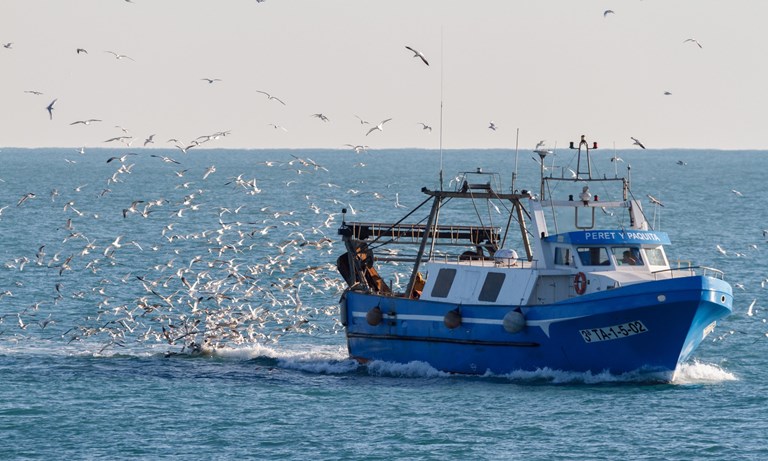
According to Europêche, fisheries knowledge and expertise have been left out since the beginning of the negotiations. This has led to the biased perception that a strong and urgent intervention on fisheries is required through the establishment of a comprehensive new regime of a global network of MPAs in the high seas, as well as the implementation of environmental impact assessment guidelines that could be enforced on fishing vessels. On the contrary, fisheries in the high seas is strictly regulated through a wide range of instruments and relevant bodies, including through numerous RFMOs, the UN Fish Stock Agreement and the FAO Port State Measures Agreement.
The Food and Agriculture Organization of the UN (FAO) tried to fill this lack of expertise within the BBNJ negotiations through an information package[2]. While this document provides an initial tool to better inform negotiators on fisheries-related matters, only a stronger involvement of fisheries experts within the BBNJ process can lead to a truly comprehensive, evidence-based and transformative High Seas Treaty that does not undermine the powers and mandate of existing management tools.
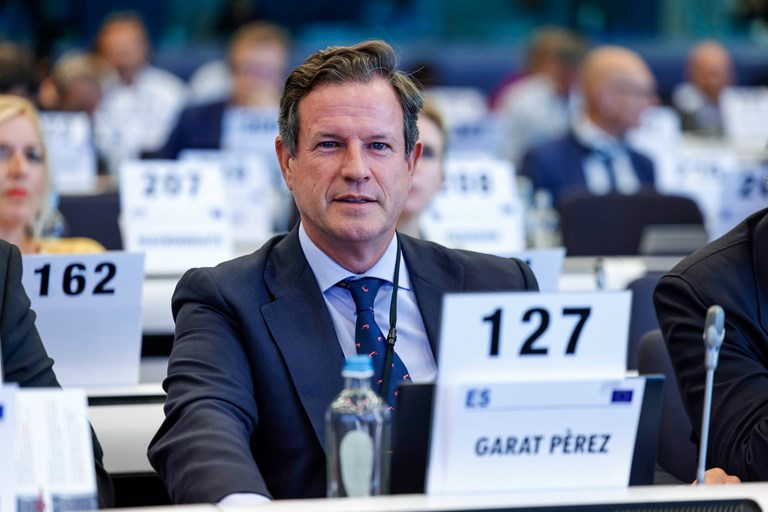
Javier Garat, President of Europêche, declared: “No regulatory gaps have been identified for fisheries. Fisheries management is a living discipline in continuous improvement, where conservation and sustainable use are at its core. There could be implementation gaps whose attention and solution can be fully addressed thanks to the effective regulation of fishing activities in the high seas.” He concluded: “We are the most regulated activity in the High Seas. The BBNJ process needs to become the expected milestone in filling gaps in other areas of the use of the oceans, without affecting the solid evolution of fisheries management tools and their effectiveness.”
Europêche therefore calls for:
- A stronger involvement of fisheries experts as well as a better consultation between BBNJ delegations and national representatives of Fisheries Agencies and Ministries of Fisheries in the context of the BBNJ negotiating process and future proceedings.
- The exclusion of fisheries from the BBNJ Agreement, as fishing activities in the high seas shall continue to be managed at the regional level in relation with the species of common interest for the contracting Parties of a given legal instrument, framework or relevant body.
- A BBNJ Agreement that effectively cooperates with RFMOs in a manner that does not undermine their scope, mandate and competences. As a result, the following shall apply:
- MPAs identified and designated in the context of the BBNJ Agreement that overlap with the coverage of an RFMO shall not regulate fishing activities.
- Environmental impact assessments shall not be required for vessels falling under the remit of RFMOs management measures.
- RFMOs and members thereof shall always be consulted when any BBNJ body seeks to adopt any action in the area of competence of such an RFMO.
- Once an RFMO has been created and it has adopted the corresponding management measures for the management of certain area in the high seas, any regulation adopted under BBNJ shall cease to be in effect.
[1] See articles 118 and 119 which provide that subregional or regional fisheries organizations (RFOs) shall be competent to manage fisheries in the high seas, and are tasked to maintain or restore the resources harvested to produce their maximum sustainable yield (MSY) level as qualified by environmental and economic factors, taking into consideration the effects on the species associated with or dependent upon harvested species, with a view of maintaining or restoring such species above levels at which their reproduction can be severely damaged (ecosystem approach).
[2] https://www.fao.org/publications/card/en/c/CC1345EN/
Press contacts:
Daniel Voces, Managing Director of Europêche: +32 2 230 48 48 daniel.voces@europeche.org