Greenhouse gas (GHG) emissions from fishing are down by 48 % compared to ‘90s levels. • Europêche warns about the consequences for consumers of highly influential environmental advocacy groups becoming radically more fact-selective.
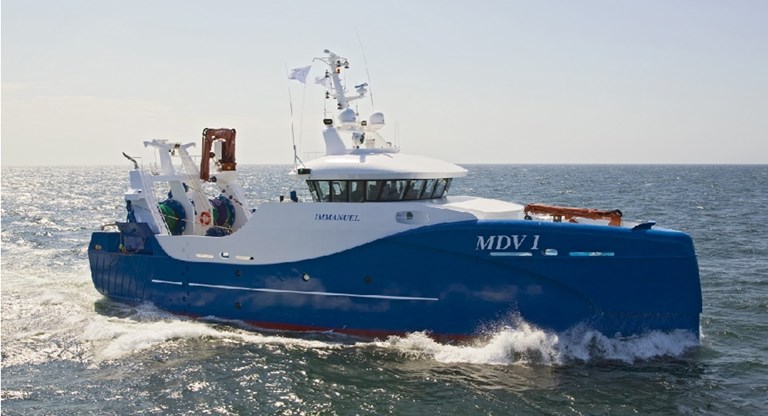
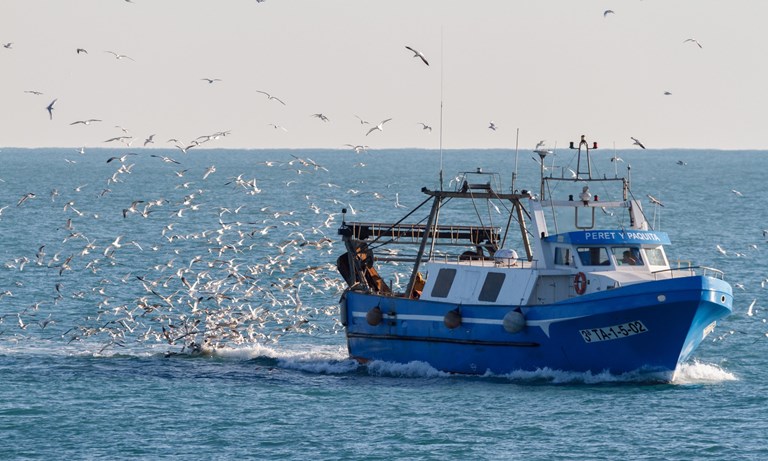
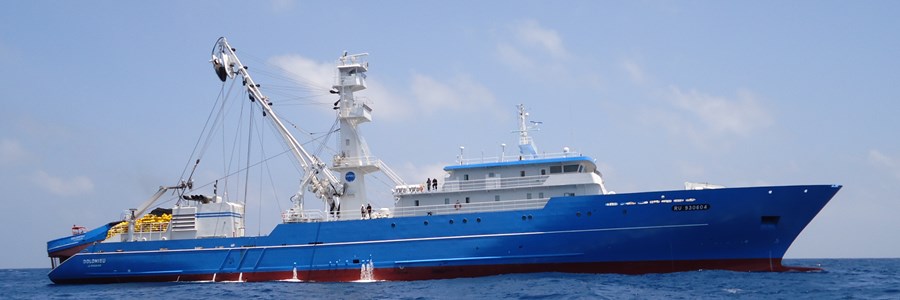
© Picture: Padmos, the MDV1 vessel.
The fishing sector, represented by Europêche, describes as deceptive and unhelpful the document “A way to decarbonise the fishing sector by 2050”, made public today by Oceana. In the opinion of the sector, the report takes an overly simplistic, biased approach. It does not rely on the advice of experts and scientists, nor does it offer a fair portrayal of the great challenge of decarbonising the European fishing fleet, as it fails to take into account the work, efforts and achievements over the last decades. Europêche warns about the consequences for European citizens of the progressive radicalisation of environmental advocacy groups present in the European arena. Many of those pursue the sole objective to decimate or even eradicate EU fisheries, falsely denying their crucial contribution to food security and regardless of their accomplishments in terms of sustainability.
Europêche welcomes and supports the effort to make the decarbonisation of the sector a reality. For this purpose, the EU fleet has been continuously investing in technologies to reduce energy consumption, improved gear design and vessel efficiency, upgraded waste management plans, smarter procurement of sustainable materials and supplies to decarbonise our industry. By way of example, EU vessels are more and more installing diesel-electric engines, efficient propeller and refrigeration systems and participating in fishing for litter and in circular economy schemes.
However, a complete decarbonisation is a serious challenge that will require time, research, funding, innovation, digitalisation, training and port infrastructures to make technologies and low-emission energy sources commercially available, cost-efficient and safe.
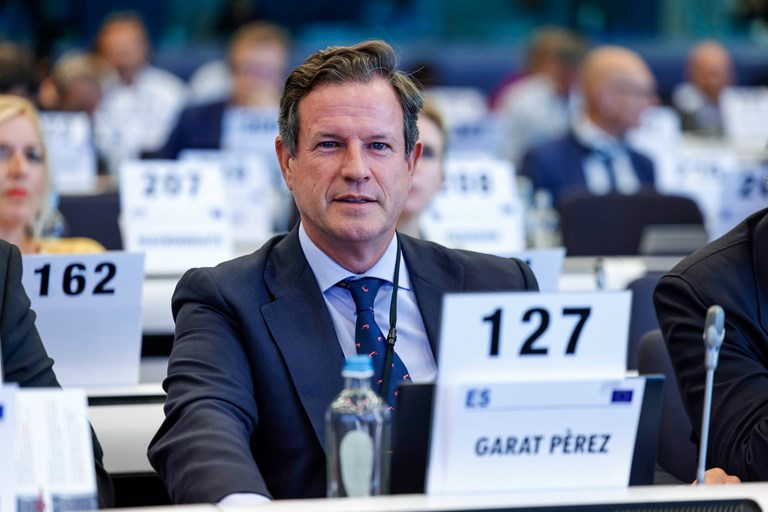
Javier Garat, President of Europêche, commented: “The sector has already significantly reduced its emissions since 1990. In fact, and according to the data reported by the EU in compliance with the Kyoto Agreement, the sector has reduced greenhouse gas emissions by almost half compared to those of 1990, the base year for the agreements on climate change. The fleet has also reduced the power of the engines by an average of 59% compared to that same year. Likewise, new technologies have allowed a continuous development in energy efficiency (proportional ratio of the fuel used to make their catches)”. In this context, Europêche stresses that 1990 is the reference year defined at international level to measure the GHG reduction commitments of States and not 2005 as recently chosen by the European Commission when adopting its global decarbonisation strategy; as a matter of convenience in view of the reality of past efforts made by many economic sectors.
Mr Garat continued: “For years the sector has been preparing for its decarbonisation within the regulatory and technological possibilities available and in a context of global pandemics and crisis. We are not waiting for NGOs to initiate this path. On the contrary, it is sad to see that many environmental NGOs, instead of proposing realistic solutions hand in hand with the sector, prefer to invest millions of euros in campaigns to demonise fishing gears such as bottom trawling and to “sell” the mistaken benefits of Marine Protected Areas”.
Europêche recalls that it was precisely the environmental NGO community that advocated against innovative fishing gears such as pulse fishing. A carbon-friendlier fishing method, backed by science, that was finally banned in Europe due to the pressure exerted by such NGOs on EU policy-makers.
In addition, the sector also points to the constant reduction of an ageing EU fleet, which currently has 65,000 active vessels (75% with <12 meters), compared to 81,600 in 2018 and 103,800 in 1996. In this sense, it is surprising that Oceana’s report converts this trend (gloomy for the fleet) into an attack when measuring the greenhouse gas emissions of the different countries and types of vessels. While size is certainly not an absolute measure of a vessel’s carbon footprint, it is worth noting that fuel-related innovations will often require larger vessels, raising the capacity of the fleet which right now is a regulatory impossibility.
According to Europêche, fishing is a global activity, and the constant erosion of the EU fleet will cause fish to become a luxury food product for privileged population groups. The supply of this healthy protein for the rest of the population will be left in the hands of non-EU countries with lower sustainability credentials, such as China, which are continuously increasing their capacity and filling the gap left by a shrinking EU fleet.
Press contacts:
Daniel Voces, Managing Director of Europêche: +32 2 230 48 48 daniel.voces@europeche.org